
What are the differences between corrugated sidewall conveyor belts and ordinary rubber conveyor belts?
In the belt conveyor industry, the conveyor belt is the core component of the conveying system, and its selection is directly related to the adaptability to working conditions, operating efficiency and overall cost. Ordinary rubber conveyor belts and corrugated sidewall conveyor belts are the two most widely used types of conveyor belts in the industry, and they differ significantly in terms of structure, performance and applicable scenarios. From the perspective of industrial application, this article briefly analyzes the core distinctions between the two, providing a professional reference for equipment selection.
I. Structural Design
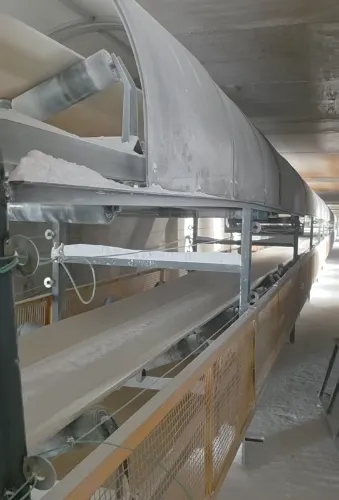
Ordinary Rubber Conveyor Belt: Planar structure, the core structure consists of upper and lower cover rubber and belt core skeleton, the whole is a flat belt structure, without additional three-dimensional structure, with strong versatility
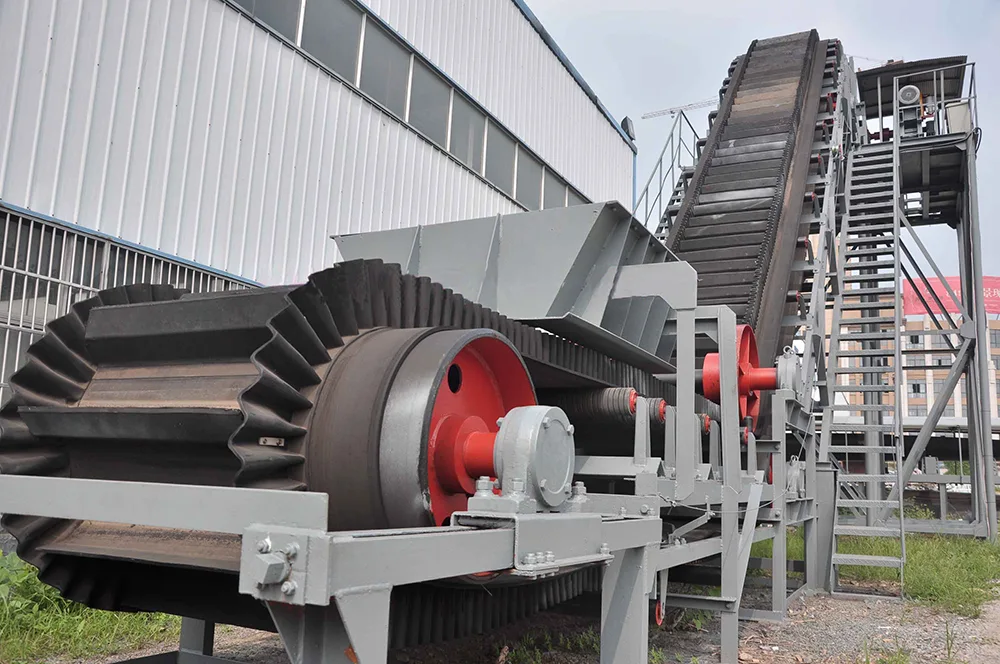
Corrugated Sidewall Conveyor Belt: Composite three-dimensional structure of base belt + corrugated sidewall + transverse partition, forming an independent closed material cavity, which breaks through the conveying limitations of planar conveyor belts in terms of structure.
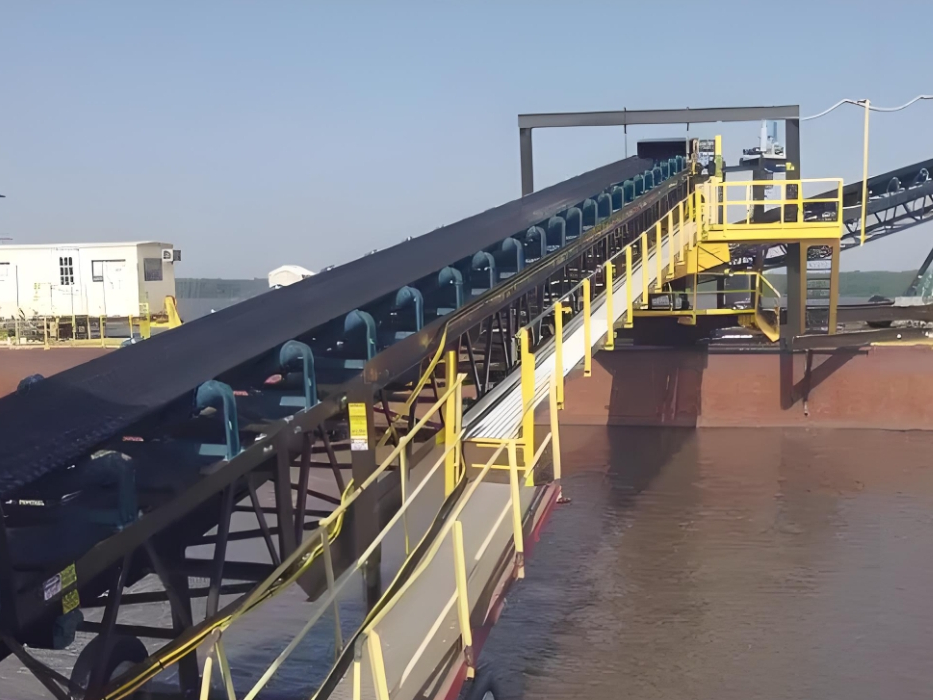
II. Core Performance Ordinary conveyor belts: Optimal operation is horizontal conveying, with a maximum safe inclination angle not exceeding 18°. Once the critical inclination angle is exceeded, serious material slippage and spillage problems will occur, making it impossible to complete high-height lifting operations. Ordinary conveyor belts are limited by the inclination angle, requiring the conveying line to be extended for the same lifting height. They occupy a large area, have low space utilization, and are prone to spillage and dust when conveying easily scattered materials, resulting in poor environmental adaptability.
Corrugated Sidewall Conveyor Belt: Capable of stable conveying across the entire range of inclination angles—including vertical lifting and steep-angle conveying—potentially saving over 60% of the required floor space. The sidewalls of the corrugated belt create an enclosed space that effectively eliminates material spillage and dust generation, making it highly compatible with scenarios requiring strict environmental compliance. It currently stands as the mainstream solution for the steep-angle lifting of bulk materials.
III. Working Condition Adaptability Ordinary conveyor belts are suitable for long-distance, horizontal/small-angle conventional conveying conditions. They are widely used in mining trunk line transportation, cement and building material production, grain storage and transfer and other scenarios with sufficient space and flat conveying lines. They occupy more than 80% of the conventional conveying market share in the industry and are the standard basic category of belt conveyors.

Corrugated sidewall conveyor belts are suitable for special conveying conditions with limited space, large inclination angles/vertical lifting, and compact process layouts. Typical applications include underground material hoisting in mines, bulk material loading and unloading in port holds, and metallurgical furnace charging. They solve the pain points of special conveying and are a core product for the intensive upgrading of industrial conveying.

IV. Overall Costs: Ordinary conveyor belts have low initial procurement and supporting costs, but high civil engineering investment for high-height conveying, while extremely low later operation and maintenance costs; Corrugated sidewall conveyor belts have slightly higher belt body and supporting costs, but can significantly reduce civil engineering investment, while the later operation and maintenance costs of sidewalls and partitions are slightly higher.
V. Industry Trends Ordinary conveyor belts remain the absolute mainstream for long-distance conventional conveying scenarios and are the core foundation for the industry's large-scale development; corrugated sidewall conveyor belts continue to increase their penetration rate in special scenarios, becoming a new growth highlight in the conveying equipment industry. The two complement each other and thrive together, contributing to the high-quality development of the bulk material conveying industry.


Related News
- How to Inspect and Replace Drive Pulley Lagging?
- What are the safety regulations for mining belt conveyors?
- What are the root causes of high energy consumption in conveyor drive systems?
- How to effectively prevent conveyor belt slippage?
- Selection guide for primary cleaner
- What are the precautions for the maintenance and repair of conveyor belts?
Leave me a message