
How to Inspect and Replace Drive Pulley Lagging?
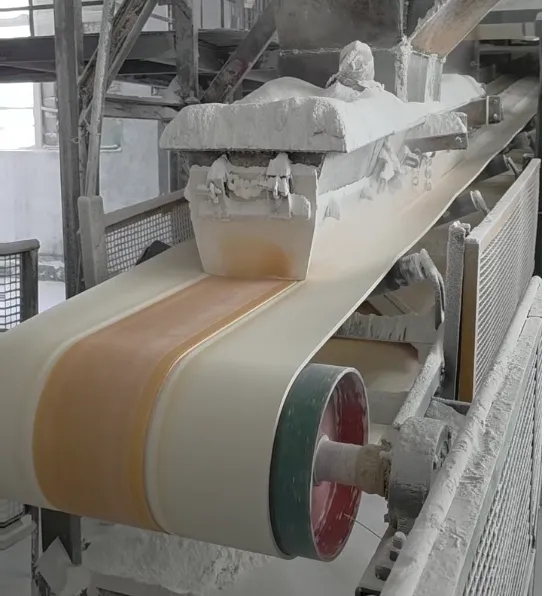
In bulk material conveing systems, drive drum lagging serves as a key component to prevent belt slippage and guarantee stable operation.Excessive wear or detachment of lagging may cause belt slippage and deviation in mild cases, or production shutdowns and safety accidents under severe conditions.However, full drum replacement is not always required to address wear. Replacing or on-site repairing the covering can often restore equipment performance at lower cost and with less downtime.


I.When is it necessary to replace or repair drive pulley lagging?
Select the most cost-effective solution based on the degree of wear.
1.Partial wear (area<30%): on-site repair without drum removal, finished within several hours.
2.Replace lagging to restore original friction where extensive blistering and ageing cracks occur.
3.Over 50% thickness loss: replace lagging to prevent slippage and belt damage.
Ceramic lagging peeling off in patches: replace to avoid belt damage.
Rule of thumb: Prioritize repair if damage is limited to surface or partial areas; replace drive pulley lagging once structural integrity is compromised.
II.Standard Procedures for Drive Pulley Lagging Replacement and Repair
Step 1: Dismantling and Surface Cleaning
Remove the worn old lagging and clear residual adhesive, grease and rust from the drum surface. High-pressure water jet or grinding machine is recommended for treatment to keep the surface clean and dry.
Step 2: Surface Preparation (Critical)
Grind the drum surface to specified roughness; this procedure directly governs adhesion of new covering and shall not be omitted.
Step 3: Selection of lagging materials
Rubber lagging: General-purpose grade for dry or slightly damp working conditions with favorable cost performance.
Ceramic-rubber Composite Lagging: Applied to high-tension, severe-wear or muddy service environments; features maximum friction coefficient and longer service life than plain rubber covering.
Polyurethane Lagging: Suitable for environments exposed to grease or chemical corrosion
Step 4: Cold Bonding or Hot Vulcanization
Cold bonding: Performed at ambient temperature for rapid on-site repair; completion within 6–8 hours with full curing in 24 hours.
Hot vulcanization: Requires dedicated equipment and heating.
Step 5: Curing and Calibration
After curing, inspect the flatness of lagging surface to eliminate bubbles and edge curling. Conduct belt deviation adjustment before putting into service.
III.Three Top Concerns from Overseas Customers
Q1:Can lagging be replaced on-site without drum removal?
Yes. Portable grinding and cold bonding equipment enables our on-site repair service. The drum does not need to be lifted out from the conveyor, greatly cutting downtime.
Q2:How long does repair or replacement take?
Cold bonding: around 6–8 hours of on-site work plus 24 hours for full curing. Process optimization is available for urgent cases to resume production within 48 hours at minimum.
Q3:What is the service life of repaired covering and your warranty policy?
Standard warranty covers 12 months. Ceramic rubber lagging boasts extended service life under regular working conditions.
IV.Why Choose Our Drive Pulley Lagging Replacement and Repair Services?
Rapid Response: Emergency on-site service available; our engineers can be reached via phone or video within 48 hours.
Diverse Material Options: Rubber, ceramic-rubber composite and polyurethane lagging available; hardness and patterns (diamond, chevron, plain) customized per operating conditions.
VI.Get Your Free Quote Now
Avoid productivity losses caused by worn drum lagging.
Click the contact information on the right to get a free quote.
Alternatively fill out the form at the bottom of our website with your working condition details, and we will deliver a technical proposal within 48 hours.
Previous :
-
Related News
- What are the safety regulations for mining belt conveyors?
- What are the root causes of high energy consumption in conveyor drive systems?
- How to effectively prevent conveyor belt slippage?
- Selection guide for primary cleaner
- What are the precautions for the maintenance and repair of conveyor belts?
- What should be noted in the selection of conveyor pulleys?
Leave me a message