

High Capacity Belt Conveyor
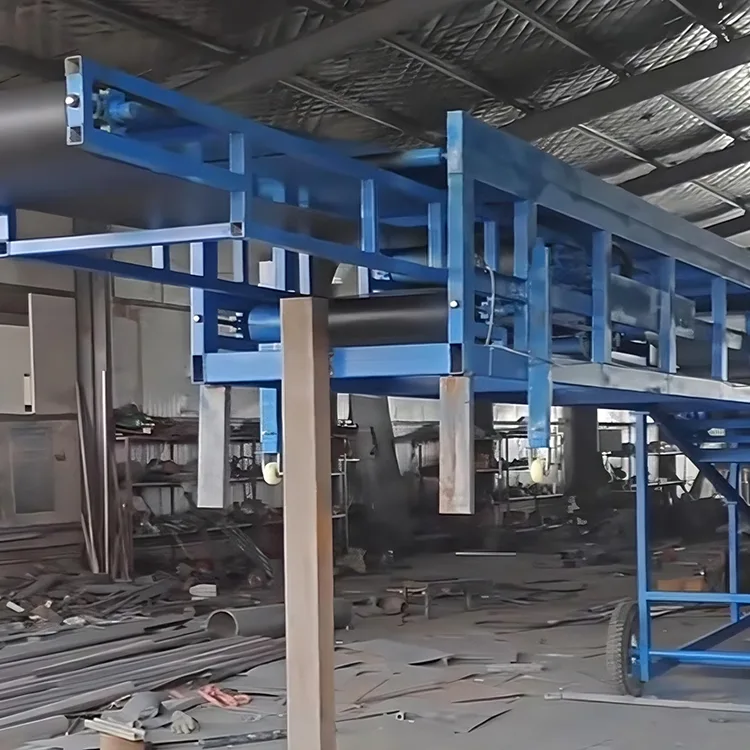
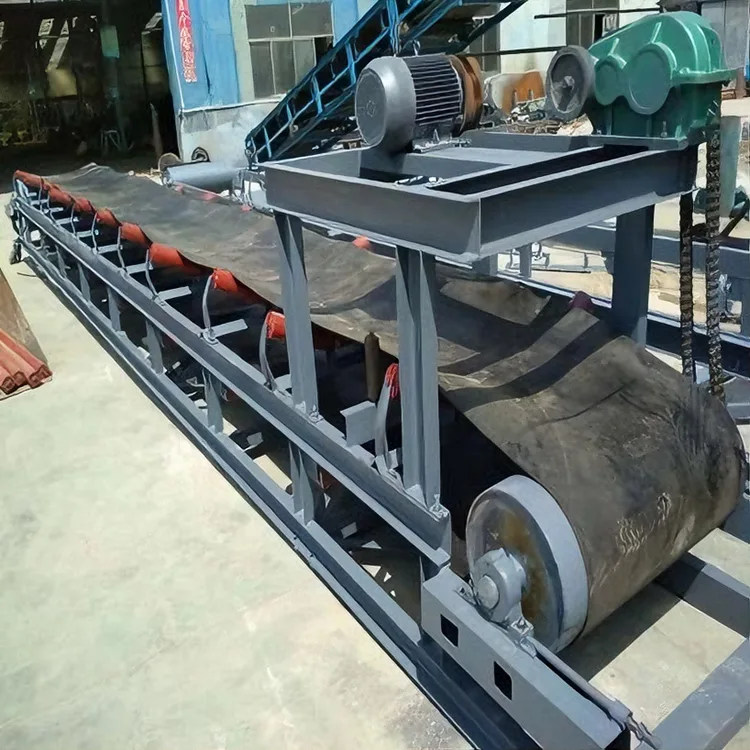
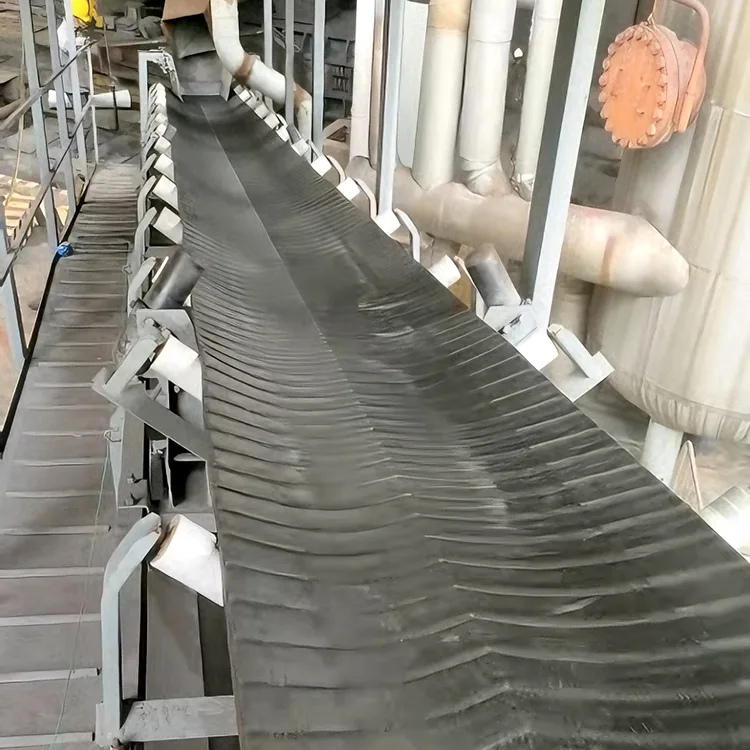
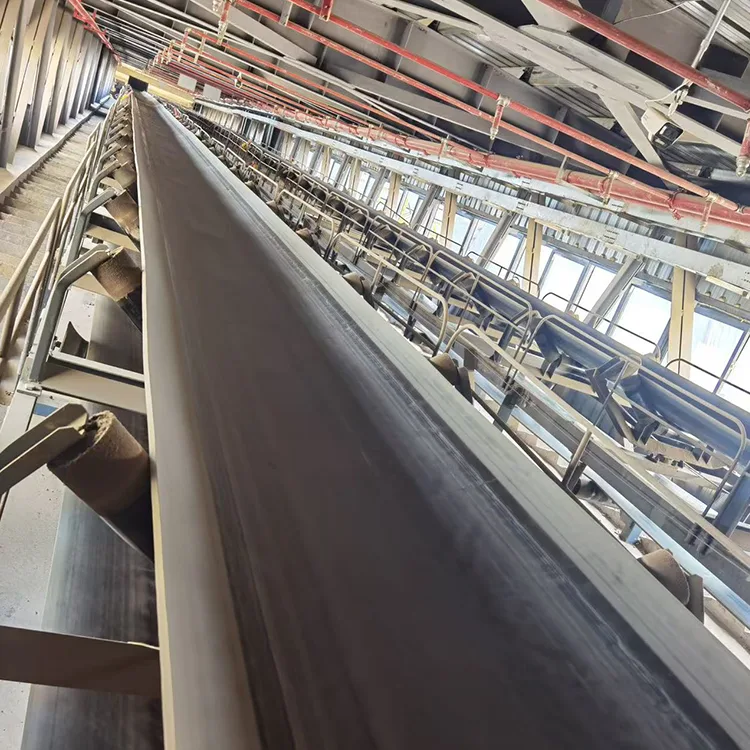
Rui Le'er, a trusted manufacturer and supplier of conveyor equipment in China, offers the High Capacity Belt Conveyor, engineered to handle large volumes of material efficiently and reliably. Ideal for industries like mining, building materials, and metallurgy, this conveyor is designed to optimize material transportation over long distances and at high speeds.
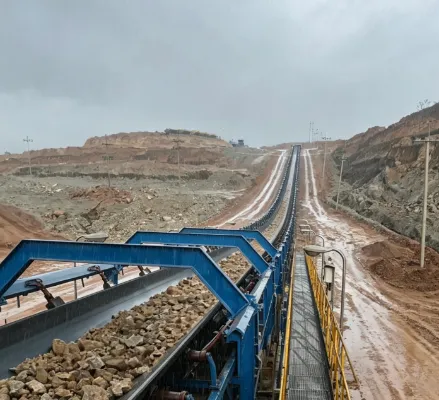
High Capacity Belt Conveyor enables the transfer of ultra-large conveying capacity up to ten-thousand tons per hour for bulk materials such as coal, ore, sand and gravel, and grain, and is suitable for large-scale operation scenarios including ports, thermal power plants, large mines and grain reserves.
It can connect large-scale front-end mining and loading equipment with back-end warehousing and processing production lines, reducing material transshipment links and lowering transshipment losses and costs.
It supports long-distance conveying on horizontal terrain, with a large inclination angle and in complex topographies. Some models can be equipped with trippers and plow unloaders to realize flexible operations such as multi-point unloading and fixed-point stockpiling.
It can be linked with an intelligent control system to monitor the conveying capacity and equipment operation status in real time, realizing automatic start-stop, speed regulation and fault early warning.
Belt Conveyor Technical Solution
1. Ultra-wide Conveyor Belt Design
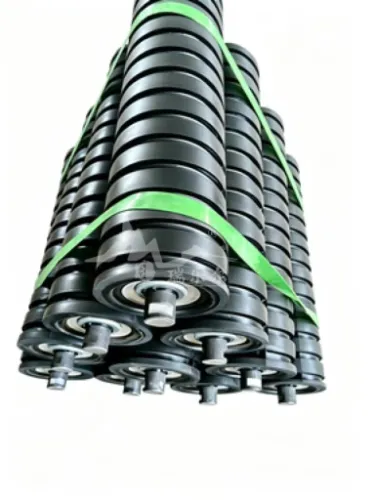
Adopting ultra-wide steel cord conveyor belts (with a belt width of up to 2.4 meters and above) combined with high-density buffer idler sets, it increases the material bearing area while reducing the stress loss of the conveyor belt, meeting the demand for ultra-high flow material conveying.
2. High-power Drive Configuration
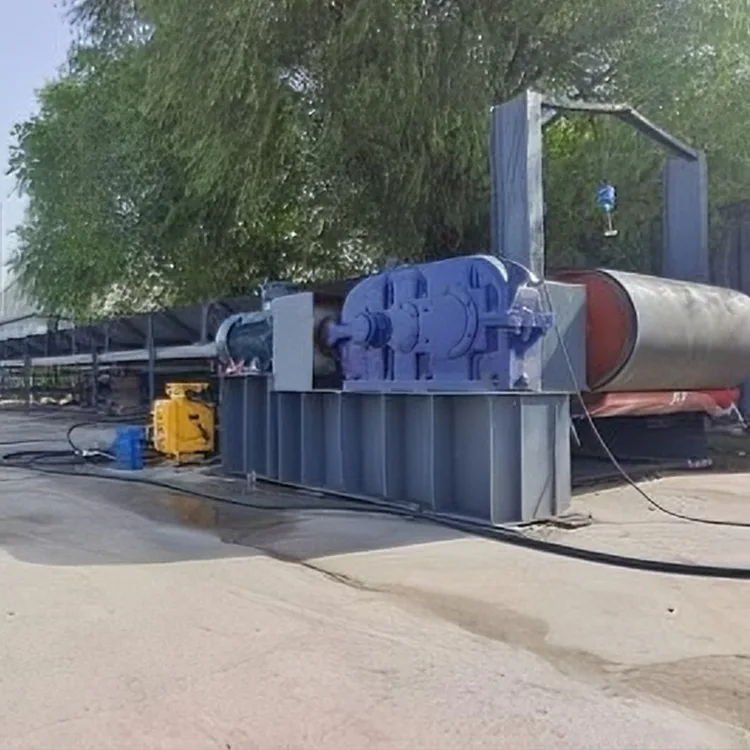
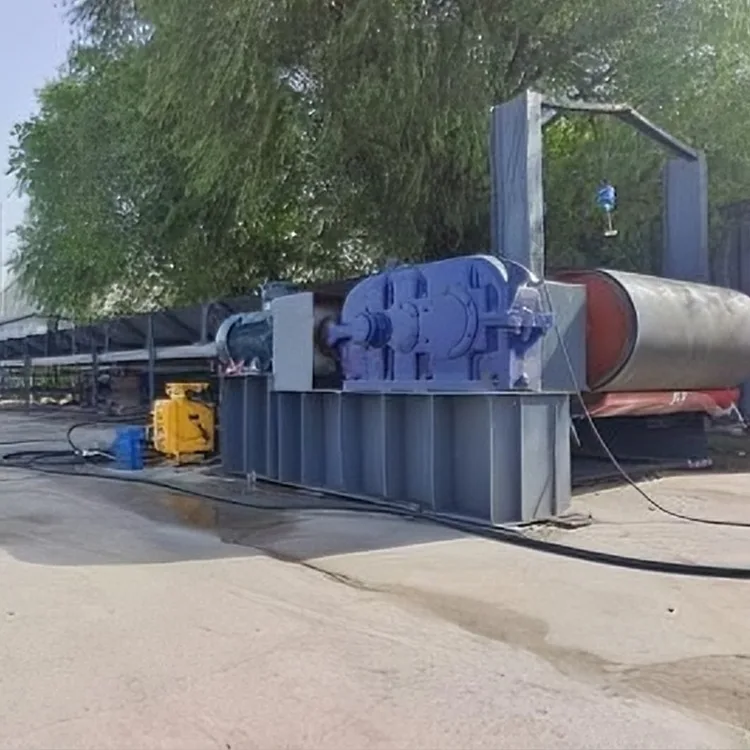
Equipped with a multi-motor combined drive and power balancing technology, as well as high-torque reducers and wear-resistant anti-slip rollers, it ensures stable heavy-load start-up and prevents conveyor belt slippage. The drive system is built with an overload protection function to cope with the instantaneous peak load of materials.
3. Heavy-duty Impact-resistant Structure
The frame is welded with high-strength H-beams and anchored by large foundation bolts, featuring strong impact and deformation resistance. A heavy-duty buffer bed and anti-impact baffle are installed at the feed inlet to cushion the impact force of falling bulk materials and prevent conveyor belt tearing.
4. Efficient and Stable Operation Guarantee
Equipped with high-precision self-aligning idlers, anti-deviation devices and an automatic conveyor belt tension adjustment system, it effectively prevents deviation and sagging of wide conveyor belts. A sealed dust cover is installed along the entire line to reduce material dust emission and protect the equipment from dust erosion simultaneously.
5. Modular and Easy-maintenance Design
Key components (idlers, rollers, conveyor belt joints) adopt a standardized modular structure, with a special maintenance platform and hoisting device configured for quick replacement of wearing parts, shortening the downtime for maintenance.
Precautions for Equipment Operation
1.Uniform Feeding Control: Feeding must be conducted evenly via quantitative feeding equipment. Strictly prohibit one-sided material piling or instantaneous overloaded feeding to prevent conveyor belt deviation, tearing or burnout of the drive motor due to overloading.
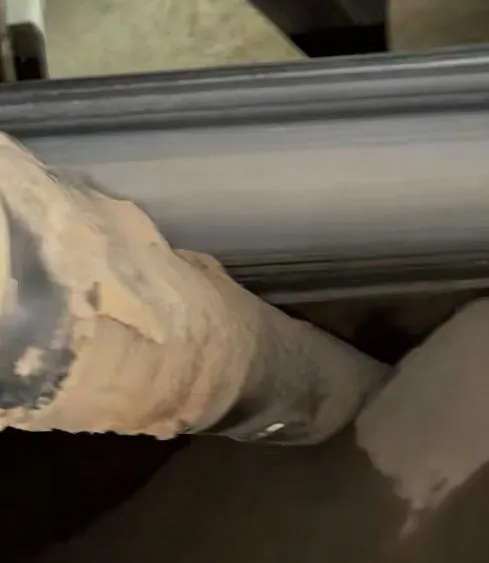
2.Key Points of Conveyor Belt Maintenance: Regularly inspect the conveyor belt tension and the vulcanization quality of joints; promptly address joint cracking and excessive conveyor belt wear if detected. Avoid contact between the conveyor belt and hard metal or sharp materials to prevent scratches and damage.
3.Drive System Maintenance: Regularly check the power balance status of multi-motors and timely adjust the motor load distribution. Fill dedicated lubricating oil into components such as reducers and bearings to ensure sufficient lubrication and prevent high-temperature wear.
4.Site and Installation Requirements: Reinforce the foundation of the installation site before construction to ensure the frame foundation bearing capacity meets the heavy-load operation requirements of the equipment. Strictly calibrate the straightness and levelness of the machine body during installation to avoid aggravated equipment wear caused by installation deviations.
5.Enhanced Safety Protection: High-strength guardrails and emergency stop pull-wire switches are installed along the entire line; safety warning lights and protective nets are added in high-risk areas. Operators must receive professional training, and it is strictly forbidden to approach moving parts such as conveyor belts and rollers while the equipment is in operation.
Product Parameters
|
Product name |
High Capacity Belt Conveyor |
|
Specification available |
B500、B650、B800、B1000、B1200、B1400、B1600、B1800、B2000........ |
|
Length |
Customized according to usage requirements (m) |
|
Material |
304/316 Carbon Steel/304/316 |
|
Color |
Customizable on demand |
|
Do you provide samples? |
No |
|
Minimum order quantity |
Customizable on demand |
|
Production cycle |
Negotiable |
|
Warranty period |
1 year |
|
Payment Method |
Telegraphic Transfer (T/T) |
|
FOB Port of Loading |
Tianjin/Shanghai, China |
|
Place of origin |
Baoding, China |


Points to Note When Selecting and Purchasing Conveying Equipment
1.What is the conveying capacity and applicable belt width? Can they match the characteristics of materials (e.g., ore, grain) and the production line rhythm?
Belt width and conveying capacity are matching calculation parameters that need to be computed in combination with material bulk density, belt speed and idler trough angle.
Key Requirements: For hard materials (e.g., large ore lumps), idlers with a wide trough angle (35°/45°) plus a low-speed and wide belt shall be adopted to prevent material rolling. For powdery materials (e.g., flour/chemical powder), a low-speed and narrow belt is required to reduce dust emission and material bed deviation, ensuring seamless synchronization with the rhythm of preceding and subsequent processes (e.g., feeders/screening machines).
2.Does the conveying distance of the conveyor allow multi-section splicing?
Multi-section splicing is supported for all conveying distances. The matching splicing processes and requirements for different conveying distances are as follows, with the core guarantee that the joint strength is ≥90% of the belt body and the operation is smooth without jamming:
Short distance (≤50m): Manufactured as a single section without splicing to reduce joint failures, suitable for short-distance transfer in workshops;Medium and long distance (50-500m): Spliced with hot vulcanized joints (universal for steel cord belts/polyester nylon belts), with a single section length of ≤100m, suitable for long-distance conveying in factories/mines;Ultra-long distance (>500m): Sectional hot vulcanization splicing combined with series-connected tension devices (head screw tension + tail counterweight tension). Each section is subject to joint reinforcement treatment and equipped with self-aligning idlers, suitable for ten-thousand-ton level conveying lines in ports/thermal power plants and supporting splicing of up to 10km in length;
Note: The splicing process requirements for steel cord conveyor belts are higher than those for polyester nylon belts, and must be operated by a professional team to avoid debonding and delamination of joints.
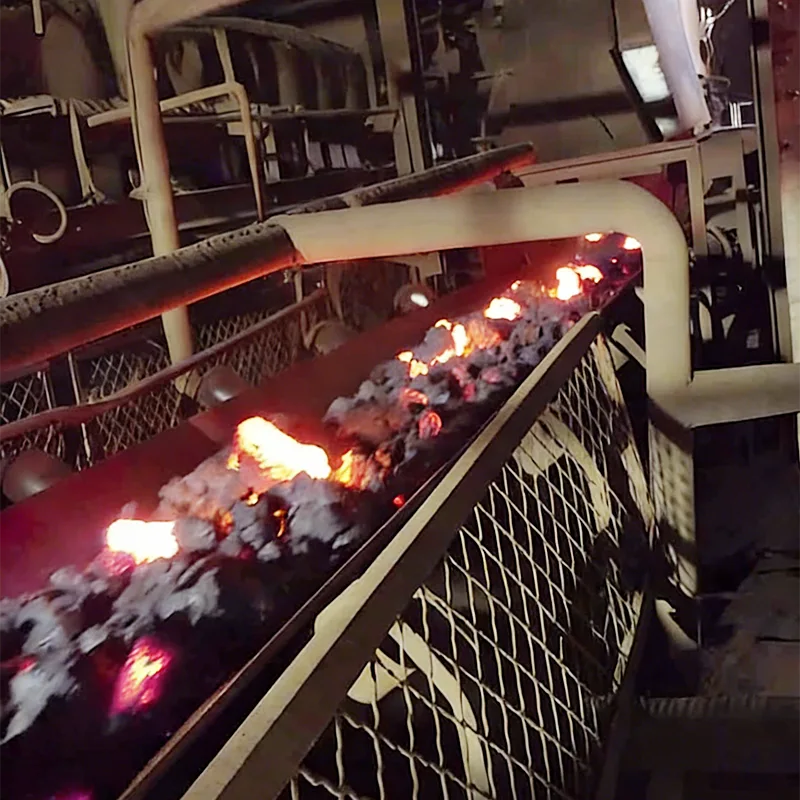
3.For material temperature (e.g., high-temperature coke) and corrosivity (e.g., chemical raw materials), what material should be selected for the conveyor belt and idlers?
The materials of the conveyor belt and idlers must be matched to the material characteristics in a synchronous manner, and selected by classification based on temperature and corrosivity. The core objective is to prevent material aging, corrosion and deformation. The specific matching specifications are as follows:
|
Select model based on material temperature |
|||
|
Material Temperature (℃) |
Conveyor belt material |
Idler material |
Adaptation Case |
|
-40~80 (room temperature) |
Polyester/Nylon Belt with Standard Wear-Resistant Rubber Cover |
Carbon steel, galvanized (standard) / stainless steel (food grade) |
Grain, sand and gravel, ambient temperature ore |
|
80~200(medium-high temperature) |
Heat-resistant polyester tape Styrene-butadiene/EPDM heat-resistant rubber |
Cast steel high-temperature wear-resistant coating |
High-temperature coke, dried aggregates |
|
>200(Ultra-high temperature) |
Steel wire rope core belt, ceramic rubber covering layer, thermal insulation layer |
High-temperature resistant material roller |
Metallurgical slag, high-temperature clinker |
|
-40~-10(Low temperature) |
Low-temperature resistant nylon belt with chloroprene rubber coating |
Carbon steel low-temperature anti-rust coating |
Cold chain materials, outdoor logistics in the northern region |
|
Select type based on material corrosiveness |
|||
|
Corrosion Level |
Conveyor Belt Material |
Idler Material |
Applicable Cases |
|
Ordinary materials |
Polyester/Nylon Wear-resistant conveyor belt |
Q235 Anti-corrosion coating |
Grain, sand, gravel, ores at ambient temperature |
|
Mild corrosion (weak acid/alkali or salt spray) |
Polyester/Nylon Oil-Resistant and Corrosion-Resistant Rubber |
Stainless Steel 304 with Anti-Corrosion Coating |
Sea Salt, Mild Chemical Materials |
|
Severe Corrosion (Strong Acids and Bases / Organic Solvents) |
Steel Wire Rope Core with Fluororubber/Nitrile Rubber Covering |
Stainless Steel 316L/Engineering Plastics (PP/PE) |
Strongly Acidic Chemical Liquids, Corrosive Powders |
4.For the installation space (e.g., narrow workshop, overhead/underground layout required), can the frame dimensions and layout scheme be customized?
English Translation
Custom frame dimensions and layout schemes are supported for all application scenarios. The customization key points for different installation spaces are as follows, with the core being adapted to the space dimensions, installation working conditions and material conveying direction:
Narrow workshop: Custom narrow-width frames (width ≤ 0.8m) combined with right-angle/arc turning layouts are adopted, and short-section conveyor belts plus compact idler sets are selected to reduce the equipment floor area, enabling wall-mounted and aisle-side arrangement;
Overhead layout: Custom lightweight H-beam frames (high strength + low self-weight) combined with steel structure supports are used, and the frames are treated with anti-corrosion and anti-rust measures. It is suitable for cross-road and cross-equipment conveying in the factory area with reserved maintenance accesses;
Underground layout: Custom low-profile frames (height ≤ 1.2m) combined with flame-retardant and anti-static structures are customized, and the frames are fixed with anchor bolts. The conveyor belts and idlers all adopt mining MA-certified materials, adapting to the narrow underground space of mines and meeting explosion-proof requirements;
Customization requirements: Accurate dimension drawings of the installation space (length × width × height), obstacle locations and conveying directions must be provided. The manufacturer will design the layout scheme on demand to ensure no interference during equipment installation and operation.
5.What is the operating energy consumption of the equipment?
The core energy consumption of conveying equipment is that of the drive motor, which has no fixed value and is mainly related to conveying capacity, conveying distance, lifting height and material resistance. The energy consumption reference for conventional working conditions is as follows, and the energy consumption can be reduced by 10%-20% through optimized design:General calculation formula: Motor power P=K×(P0+P1+P2), where K = safety factor (1.1-1.5), P0 = power for conveyor belt running resistance, P1 = power for material lifting, P2 = power for additional resistance;
Energy consumption reference for conventional working conditions:
1.Horizontal conveying (no lifting): With a belt width of 1000mm, conveying capacity of 1000t/h and distance of 100m, the motor power is about 37-55kW, and the hourly energy consumption is about 37-55kWh;
2.Inclined conveying (lifting height ≤10m): With the same belt width and conveying capacity, the motor power is about 55-75kW, and the hourly energy consumption is about 55-75kWh;
3.Heavy-duty conveying (large ore lumps + lifting height >10m): With a belt width of 1400mm, conveying capacity of 2000t/h and distance of 200m, the motor power is about 110-160kW, and the hourly energy consumption is about 110-160kWh;
Energy-saving optimization: Adopt variable frequency motors combined with power balancing technology to adjust the speed on demand and reduce the rotating speed during no-load/light-load operation, which can cut energy consumption by more than 20%; use low-resistance idlers (polymer idlers) to reduce the running resistance of the conveyor belt and achieve further energy savings.
6.Is the equipment equipped with safety devices such as overload protection, belt breakage early warning and anti-deviation devices?
A full set of safety protection devices is included as standard, and customized upgrades are available according to working conditions. The functions, installation positions and trigger mechanisms of the core devices are as follows, ensuring timely shutdown of the equipment in case of abnormalities to prevent the escalation of accidents:
|
Safety device |
Core Function |
Installation location |
Trigger Mechanism and Handling |
|
Overload protection device |
Prevent the motor from burning out due to overload |
Next to the drive drum (linked with the motor) |
When the load exceeds 1.2 times the rated value, the motor power is automatically cut off, and audible and visual alarms are triggered. |
|
Belt Break Warning/Protection Device |
Warning: Conveyor belt micro-tear detected, emergency shutdown when the belt breaks |
Top and bottom layers of the conveyor belt, behind the feed inlet |
Detect sudden changes or tears in the conveyor belt tension via sensors, issue early warnings, and immediately stop the machine and lock the drive system if the belt breaks. |
|
Anti-derailment device |
Prevent conveyor belt misalignment and edge wear |
Both sides of the conveyor belt (one set every30-50 meters) |
When the conveyor belt deviation is ≥50mm, the self-aligning idler corrects it automatically; when the deviation is ≥100mm, it triggers a shutdown. |
|
Anti-slip device |
Prevent the drive drum from slipping on the conveyor belt |
Next to the drive drum |
When the speed difference between the drum and the conveyor belt is ≥10%, an audible and visual alarm will sound; if slipping continues, the machine will stop. |
|
Material Flow Detection Device |
Prevent clogging and overflow |
Feed inlet, discharge outlet |
When the material pile exceeds the layer height, issue a warning and reduce the feeding speed; stop the machine if there is a severe blockage. |
|
Upgrade options: For mining/explosion-proof conditions, a customizable explosion-proof safety device is available; for high-temperature conditions, a high-temperature resistant sensor can be customized.
|
|||
7.What dust-proof and sealing solutions are provided for conveying dusty materials?
For dusty materials (powder, sand and gravel, coke powder), an integrated dust-proof and sealing solution combining full sealing, source dust suppression and terminal dust collection is adopted.
The specific configurations are as follows:
1.Full-line Sealing Protection: A color steel/FRP sealing cover is installed on the entire conveyor belt, and the cover is designed with a quick-release structure for easy maintenance; double-layer sealing skirts and soft curtains are fitted at the feed inlet and discharge outlet to prevent material dust generation and splashing.
2.Source Dust Suppression: The feed inlet is sealed; a sealed quantitative feeder is adopted to reduce dust emission caused by material falling.
3.Terminal Dust Collection: A sealing cover is installed at the discharge outlet.
4.Auxiliary Protection: Dust-proof bearing blocks are used for idlers and rollers to prevent component wear caused by dust ingress; an anti-static coating is applied to the inner side of the sealing cover to avoid safety accidents induced by electrostatic accumulation of dust.
8.Is the equipment integrated with a PLC control system to realize functions such as automatic start-stop, speed regulation and material linkage?
Mainstream equipment all supports the integration of PLC control systems: the basic version features single-machine PLC control, while the mid-to-high-end version is equipped with IoT intelligent PLC control, with customizable functions tailored to the automation requirements of production lines.
Core Functions and Implementation Methods
Basic Functions (Standard Configuration)
1. Automatic Start-Stop: Realizes unattended automatic start-stop of the equipment based on material flow detection signals to avoid no-load operation.
2. Stepless Speed Regulation: Achieves real-time belt speed adjustment according to material volume through the linkage of variable frequency motors and the PLC, realizing on-demand speed regulation and energy saving.
3. Fault Interlock: Automatically shuts down the equipment and triggers interlocked shutdown of upstream and downstream equipment in the event of malfunctions (e.g., deviation, slipping, overload) to prevent material blockage and overflow.
Customization Requirements The control protocols of upstream and downstream equipment and the drawing of production line automation requirements must be provided. The manufacturer will develop the PLC control program on demand to achieve seamless connection.
Core Principles for Selection and Procurement
1. Define Working Conditions First, Then Select Equipment: Clarify material characteristics, conveying distance, installation space and automation requirements to avoid cost waste caused by over-selection.
2.Synchronous Matching of Materials and Safety Devices: For special working conditions such as corrosivity, high temperature and dust, ensure the all-dimensional adaptation of conveyor belts, idlers, safety devices and dust-proof solutions.
3. Balance Automation and Energy Consumption: Select the PLC control version according to the automation level of the production line; prioritize the use of variable frequency motors combined with energy-saving designs to balance automation and energy consumption economy.
Main Components of Conveying Equipment
1、Drive Unit
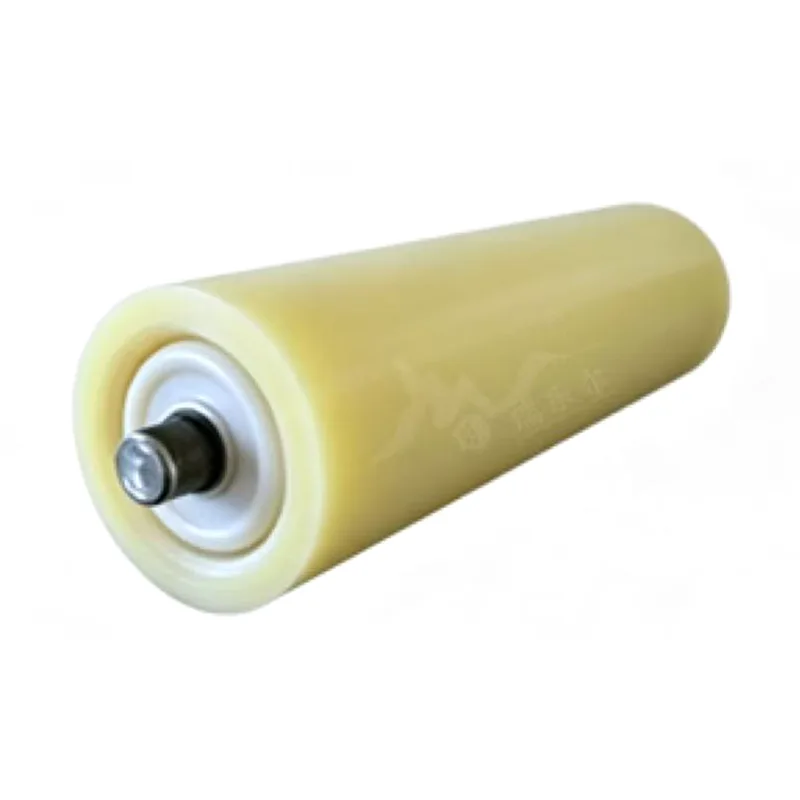
2、Idler Set
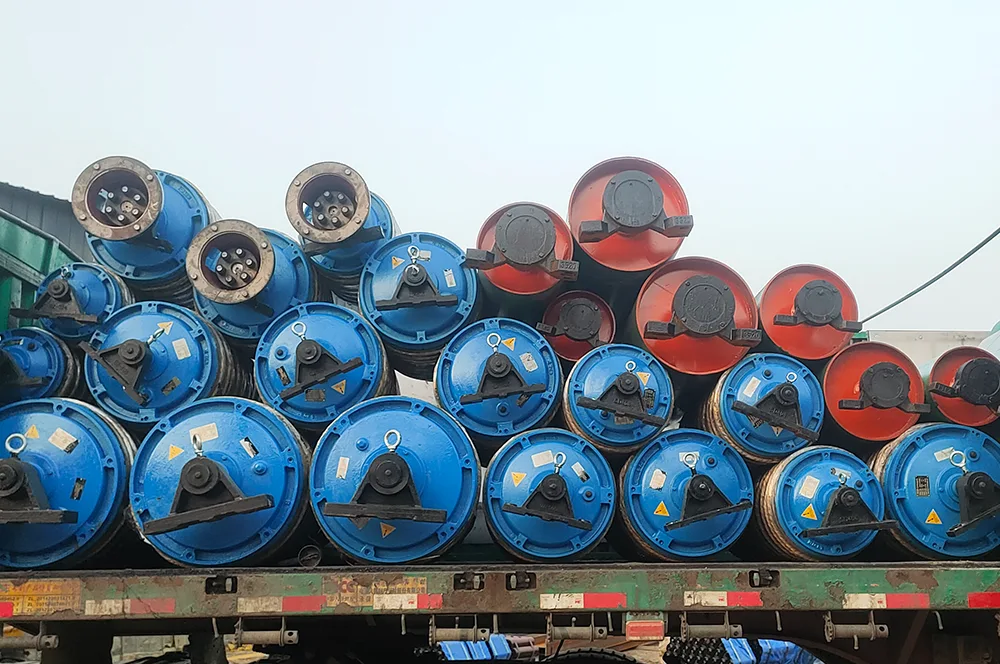
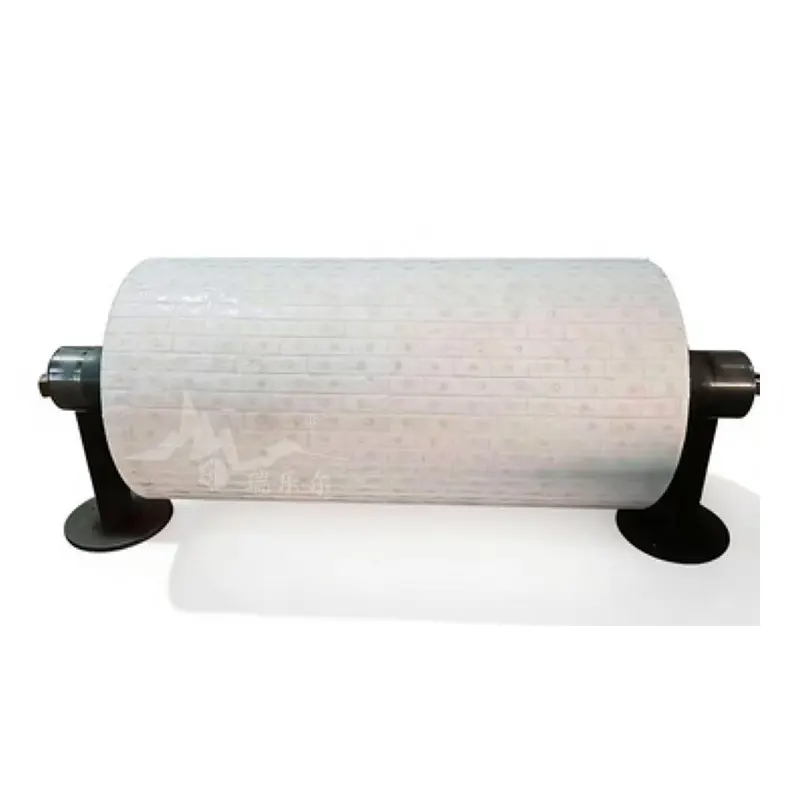
3、Roller Set
4、Integrated Frame
5、Protection Device
6、Conveyor Belt
7、Electrical System
Hot Tags: High Capacity Belt Conveyor, Belt Conveyor Manufacturer, Customized Conveyor Systems
Send Inquiry
Contact Info
-
Address
Donghuan Industrial Zone, Boye County, Baoding City, Hebei Province, China
-
Tel
-
E-mail
Looking for a reliable conveyor equipment factory in China?
Send your inquiry to Rui Le’er to receive professional technical advice, customized conveyor solutions, and competitive factory pricing directly from the manufacturer.