
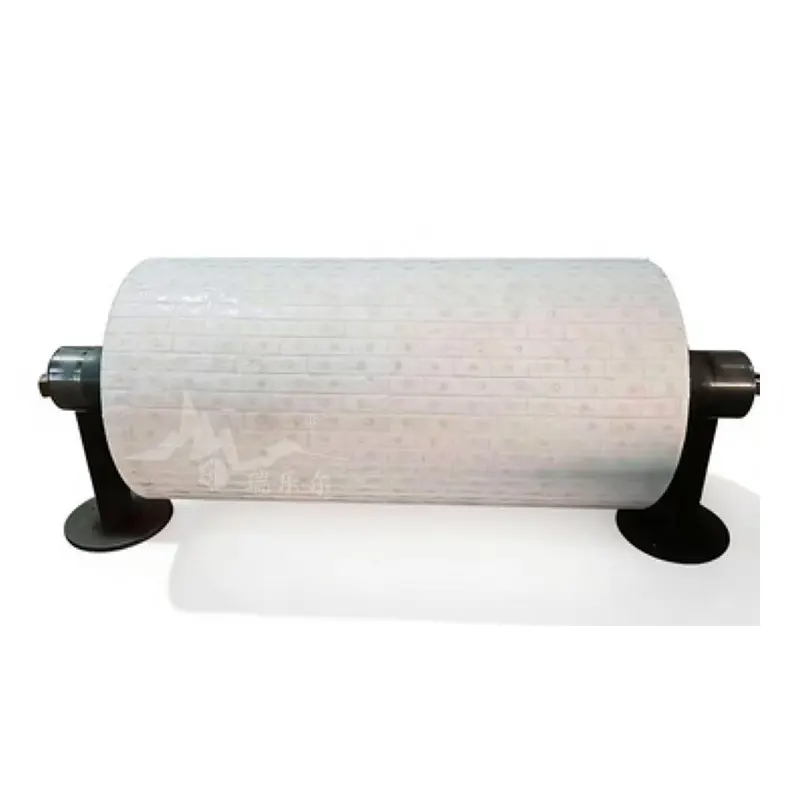

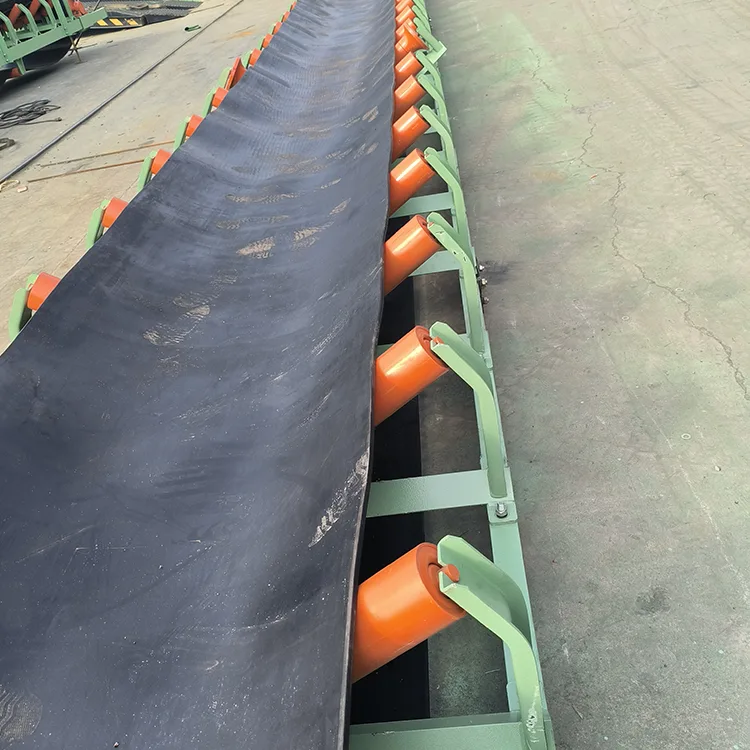
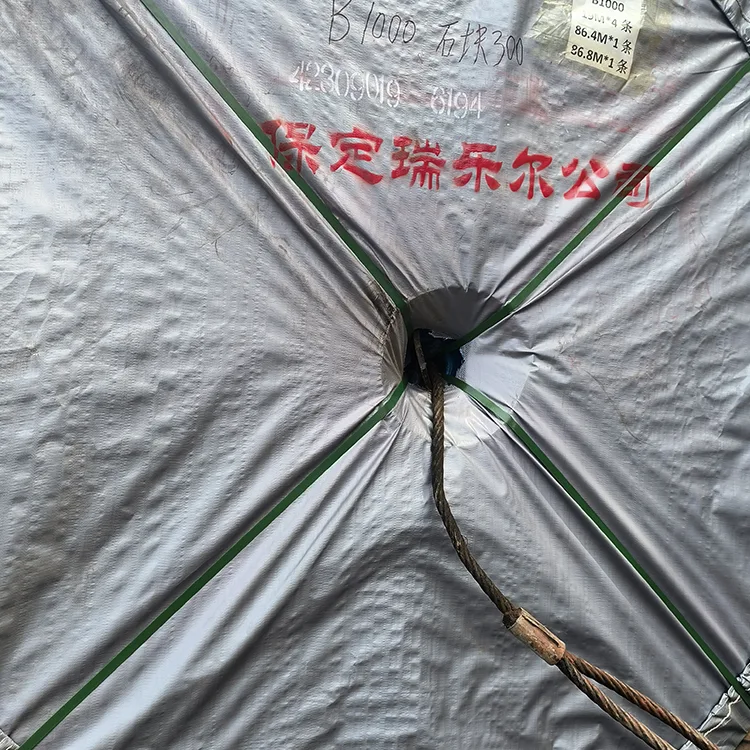
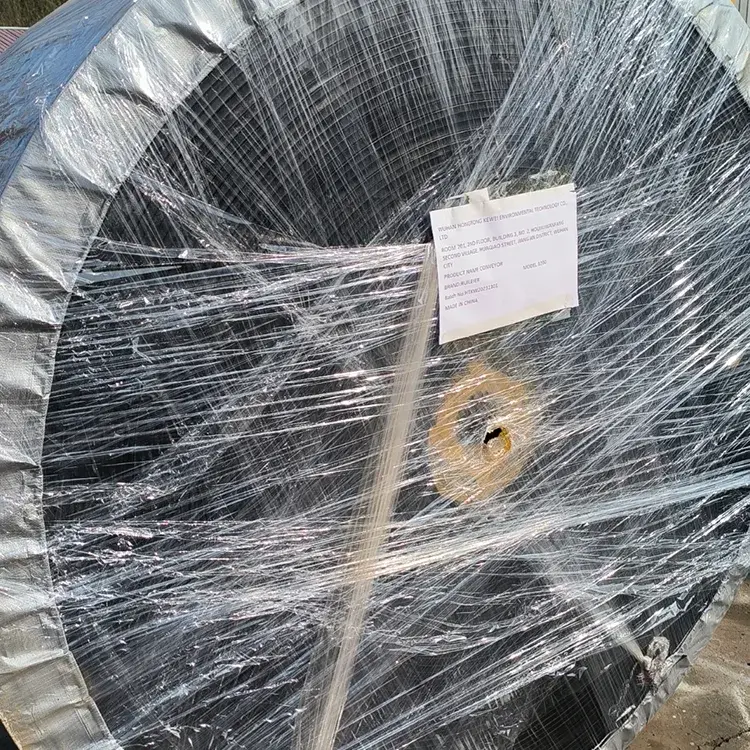
EE Polyester Conveyor Belt
Rui Le'er is a trusted China manufacturer and supplier of EE Polyester Conveyor Belt, offering high-strength, low-elongation solutions for long-distance and heavy-duty conveying. As a professional factory, we provide durable, wear-resistant belts with stable performance, full-size options, OEM customization, and fast delivery for global buyers.
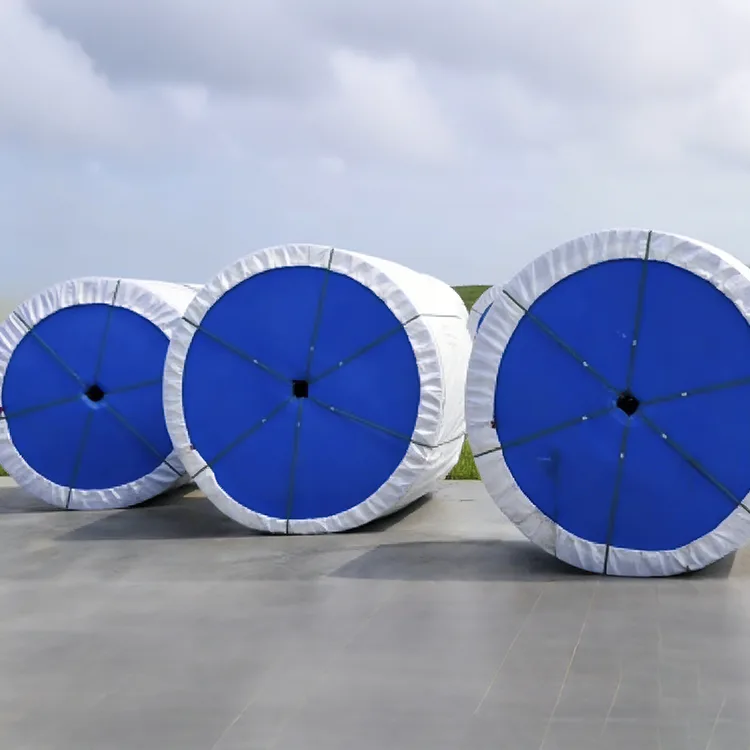
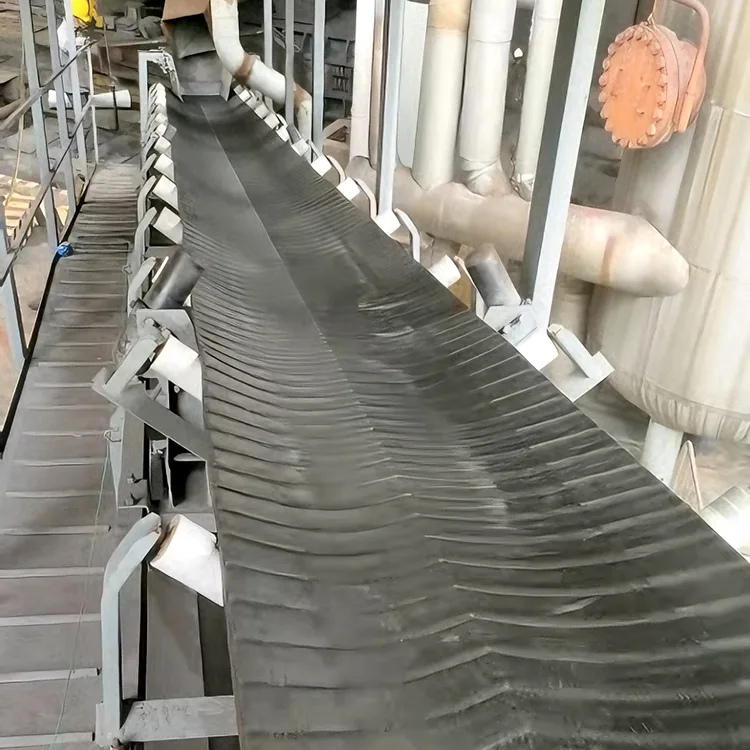
EE Polyester Conveyor Belts are formed by bonding multiple layers of polyester canvas in sequence, with the canvas covered by rubber and plastic materials, and high-quality rubber as the top covering layer, featuring excellent elasticity.
Features and Applications
Compared with nylon conveyor belts and ordinary cotton fabric core conveyor belts, it boasts superior advantages such as high tensile strength, good elasticity, impact resistance, light self-weight and excellent troughability. It can effectively reduce conveying costs and enable high-speed, large-span and long-distance material conveying.
In addition to inheriting the various advantages of nylon conveyor belts, polyester conveyor belts also have the unique merits of low elongation and completely unchanged wet strength. These characteristics are particularly crucial for long-distance conveying and operation under humid working conditions.
Available Strength Specifications
The optional tensile strength specifications for nylon canvas and polyester canvas include: 100N/mm, 125N/mm, 150N/mm, 200N/mm, 250N/mm, 300N/mm, 400N/mm, etc.
|
Product name |
EE Polyester Conveyor Belt |
|
Specification available |
B500、B650、B800、B1000、B1200、B1400、B1600、B1800、B2000........ |
|
Length |
Customized according to usage requirements (m) |
|
Material |
Carbon Steel/304/316 |
|
Color |
Customizable on demand |
|
Do you provide samples? |
Yes |
|
Minimum order quantity |
Customizable on demand |
|
Production cycle |
Negotiable |
|
Warranty period |
1 year |
|
Payment Method |
Telegraphic Transfer (T/T) |
|
FOB Port of Loading |
Tianjin/Shanghai, China |
|
Place of origin |
Baoding, China |


When selecting and purchasing conveyor belts, the following points need to be noted
1.What is the conveying capacity and applicable belt width?
Belt width 500mm: Suitable for a conveying capacity of ≤200t per hour, for light and small-batch materials (e.g., powder, small-particle chemical raw materials);
Belt width 650mm/800mm: Suitable for a conveying capacity of 200-500t per hour. A universal type for conventional materials such as ore, grain, sand and gravel;
Belt width 1000mm/1200mm: Suitable for a conveying capacity of 500-1500t per hour, for medium and large conveying lines and large-batch material transfer;
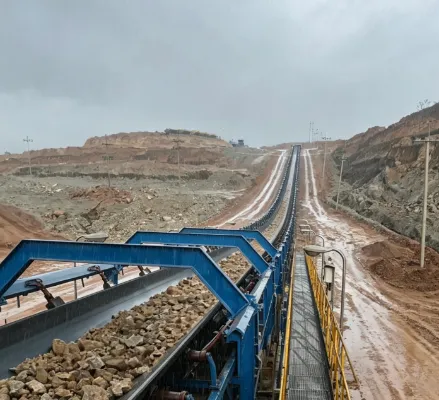
Belt width ≥1400mm: Suitable for a conveying capacity of ≥1500t per hour, for heavy-duty conveying scenarios such as ports and mines.
Core Principle: The belt width must match the dimensions of the conveyor rollers and idlers. If the conveying capacity exceeds the conventional range, it can be adapted by increasing the belt speed and adding belt plies.
2.Does the conveying distance of the conveyor allow multi-section splicing?
Polyester/nylon conveyor belts fully support multi-section splicing, which is a core adaptive advantage for long-distance conveying. The splicing requirements for different conveying distances are as follows:
2-1.Short distance (≤50m): Can be manufactured as a single section without splicing to reduce the risk of joint failure.
2-2.Medium and long distance (50-500m): Splicing with hot vulcanized joints is adopted, whose strength can reach more than 90% of the belt body itself. It is suitable for high-speed and large-span conveying with no risks of debonding or cracking.
2-3.Ultra-long distance (>500m): Sectional hot vulcanization splicing is applied, with the length of each section customized according to transportation and installation conditions (the conventional single section is ≤100m). The splicing joints are uniformly reinforced and matched with the conveyor tension device to ensure the overall operational stability. Note: The higher the canvas strength specification (e.g., 300N/mm, 400N/mm), the higher the technical requirements for splicing, which must be operated by a professional team.
3.What material of conveyor belt should be selected according to the material temperature?
The temperature resistance of polyester/nylon conveyor belts is determined by the material of their rubber cover layer, which must be strictly matched to the material temperature to prevent rubber aging and cracking.
The conventional selection criteria are as follows:
3-1.Normal temperature materials (-10℃~80℃): Select a standard wear-resistant rubber cover layer. It is suitable for most materials (e.g., grain, sand and gravel, normal temperature ore, chemical raw materials) and offers the highest cost performance.
3-2.Medium temperature materials (80℃~120℃): Select a heat-resistant rubber cover layer (e.g., a blend of styrene-butadiene rubber and polybutadiene rubber). It is suitable for dried materials, hot aggregates, etc.
3-3.Low temperature materials (-40℃~-10℃): Select a low temperature-resistant rubber cover layer. It is suitable for cold chain materials and low-temperature outdoor conveying scenarios in northern regions to prevent rubber embrittlement and cracking.
3-4.High temperature materials (>120℃): Pure polyester/nylon base belts are not recommended. A customized composite version with heat-resistant canvas and high-temperature rubber is required, or the belt can be used with a heat insulation layer (for material temperature ≤200℃).
3-5.Core Principle: The actual material temperature (rather than the ambient temperature) must be specified during selection. Instantaneous high temperature (e.g., impact-induced high temperature of materials) shall be additionally stated, and a temperature resistance margin shall be reserved.
4.For the installation space (e.g., narrow workshop, overhead/underground layout required), can customized dimensions be provided?
Polyester/nylon conveyor belts support full-size customization and can be perfectly adapted to special installation spaces such as narrow workshops, overhead and underground layouts. The customization dimensions include: Belt width customization: The regular width range is 300mm-2400mm; for ultra-narrow (<300mm) and ultra-wide (>2400mm) specifications, custom mold opening is available for production. Belt length customization: Precisely cut according to the actual layout dimensions of the conveyor with no fixed length limit. For narrow workshops, short-section belt bodies can be customized for convenient on-site handling and installation. Special structure customization: For overhead layouts, thickened base belts with anti-tear layers can be customized to enhance wind and tensile resistance; for underground layouts, flame-retardant and anti-static rubber cover layers can be customized to meet mine safety specifications. Troughability customization: When the idler set angle of the conveyor in narrow spaces is special, base belts with high troughability can be customized to prevent material spillage. Note: Detailed installation drawings of the conveyor (including idler spacing, roller diameter and layout angle) must be provided before customization to ensure dimensional matching.
5.What steps are required for daily maintenance? Is professional operation needed?
Daily Maintenance of Polyester/Nylon Conveyor Belts Daily maintenance of polyester/nylon conveyor belts is mainly based on basic inspection and simple upkeep, which does not require frequent operation by professional personnel. Only special faults need to be handled by a professional team. The specific maintenance requirements are as follows:
I. Daily Maintenance Procedures (Can be independently completed by operators, recommended to be carried out daily/weekly as scheduled)
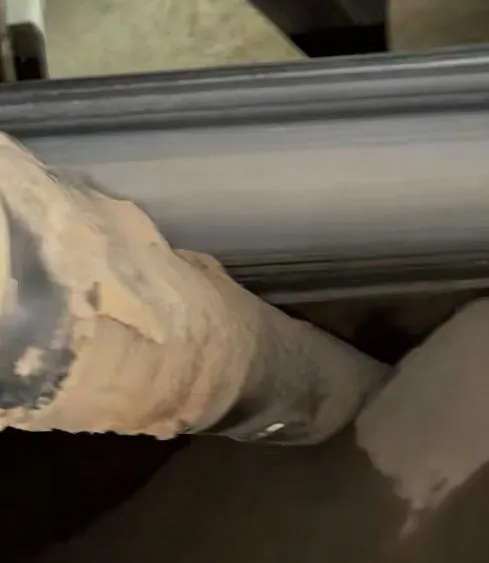
1. Visual Inspection: Check the belt surface daily for scratches, holes and debonding, and inspect joints for cracking and edge warping. Repair minor damages in a timely manner with special rubber repair agent if found.
2. Cleaning: Remove material residues and oil stains from the belt surface weekly to prevent rubber corrosion by oil stains and belt wear caused by materials jamming between idlers and the belt.
3. Tension Check: Inspect the belt tension weekly. If slipping or deviation occurs, fine-tune via the conveyor tension device to ensure the belt runs centered without over-tensioning (to avoid tensile deformation of the base belt).
4. Edge Protection: Check the belt edges for wear. If there are burrs on the edges of the idler sets, grind them in a timely manner to prevent belt edge cutting.
II. Professional Operation Scenarios (Only need to entrust professionals regularly or arrange on-site handling in case of faults)
1. Professional personnel shall inspect conveyor belt joints and the canvas inside the base belt every 6-12 months to identify potential damages.
2. In case of faults such as large-area belt damage, joint cracking and base belt delamination, professionals are required to conduct repairs using processes such as hot vulcanization and cold bonding.
3. For overall replacement and re-splicing of conveyor belts, on-site operation by a professional team is required to ensure installation accuracy.
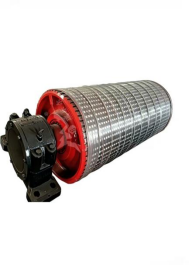
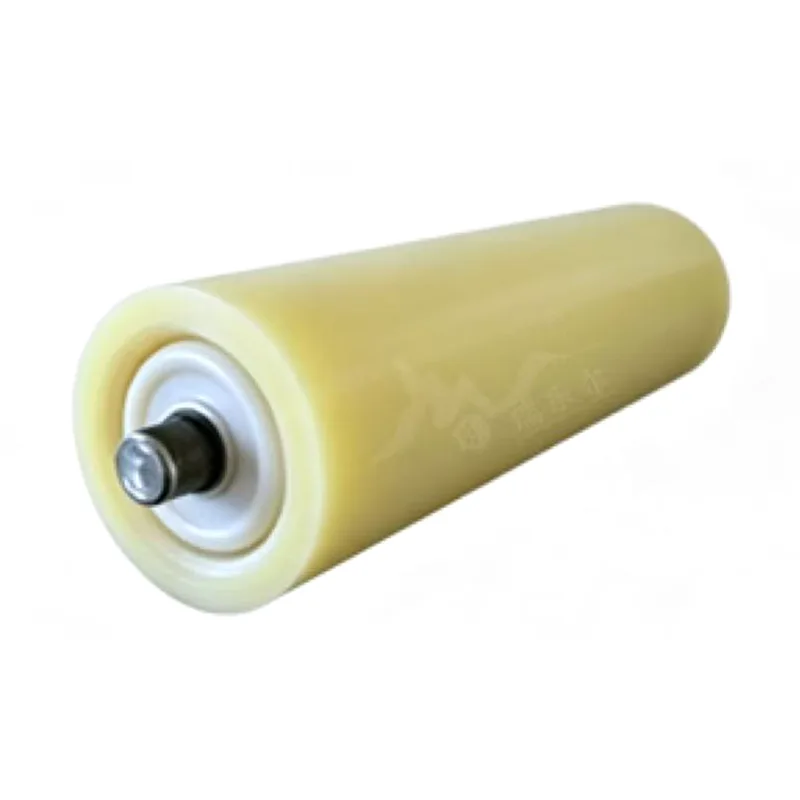
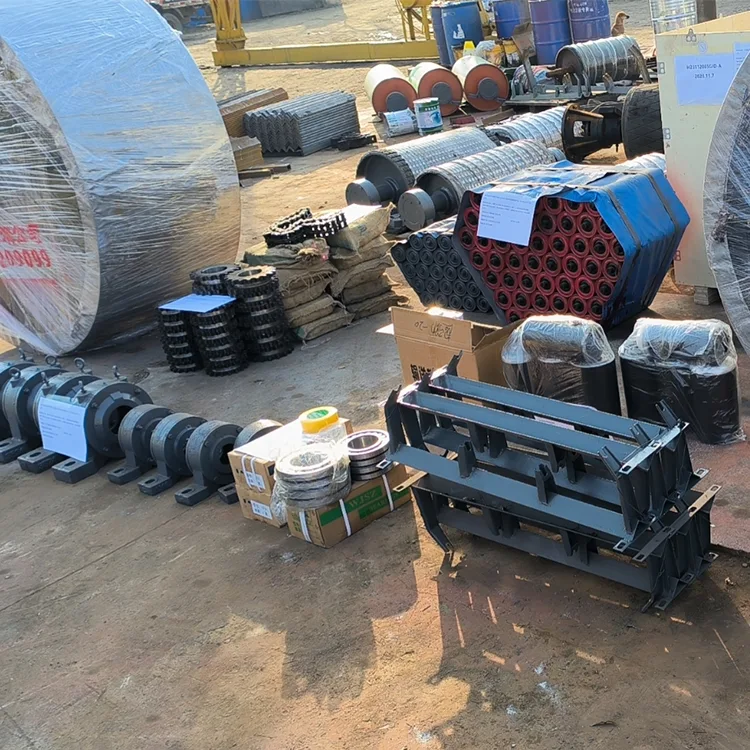
Main Components of Conveying Equipment
1、Drive Unit
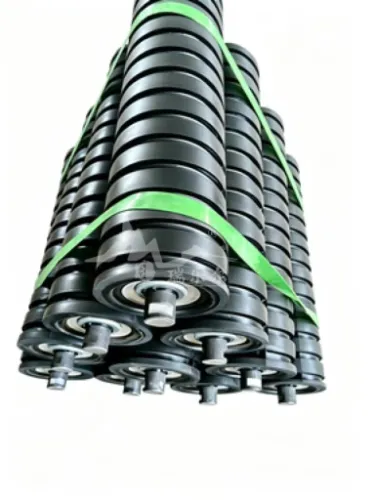
2、Idler Set
3、Roller Set
4、Integrated Frame
5、Protection Device
6、Conveyor Belt
7、Electrical System
Hot Tags: EE Polyester Conveyor Belt Supplier, Polyester Conveyor Belt Wholesale, Conveyor Belt Factory
Related Category
Send Inquiry
Contact Info
-
Address
Donghuan Industrial Zone, Boye County, Baoding City, Hebei Province, China
-
Tel
-
E-mail
Looking for a reliable conveyor equipment factory in China?
Send your inquiry to Rui Le’er to receive professional technical advice, customized conveyor solutions, and competitive factory pricing directly from the manufacturer.